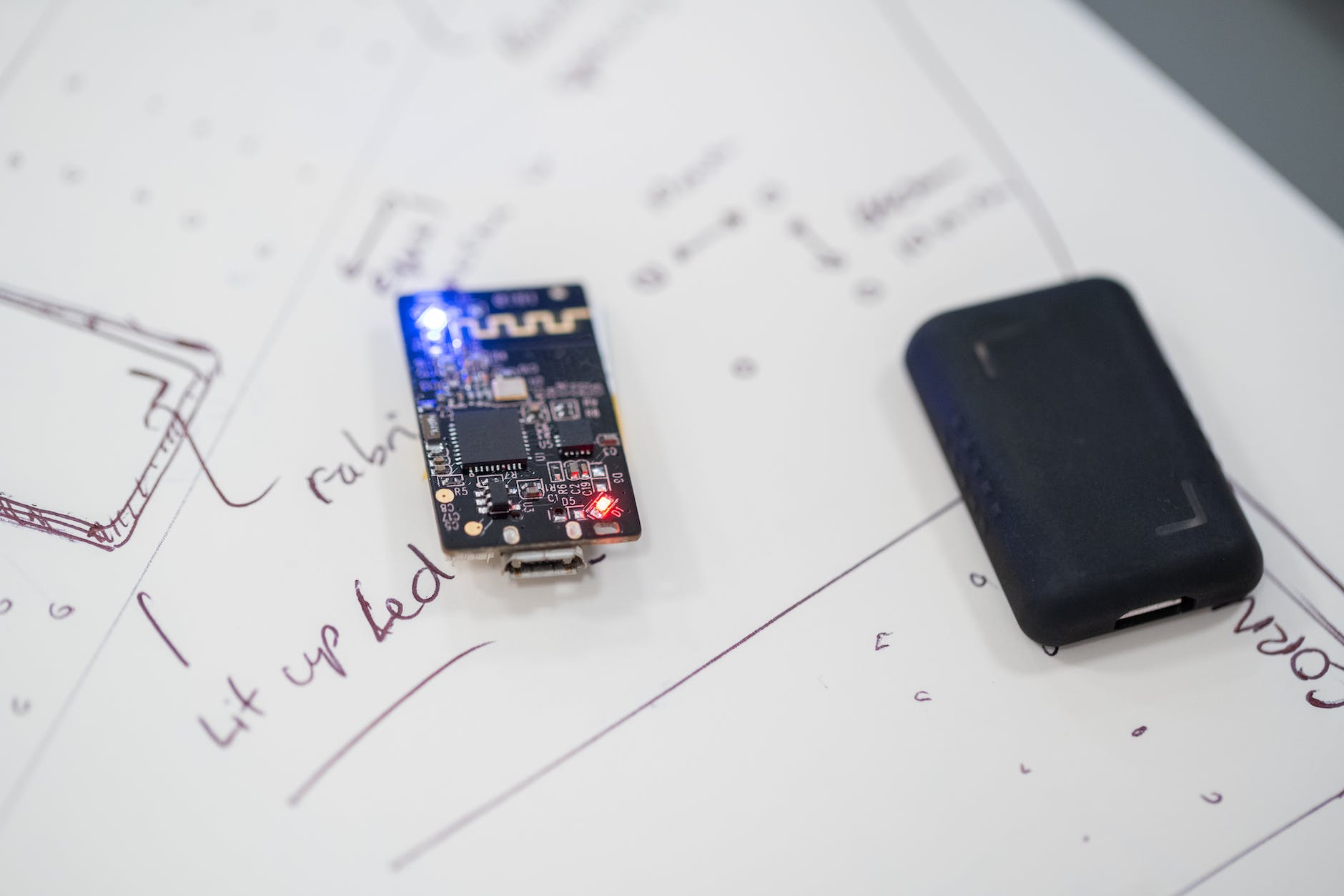
A finished prototype does not mean a factory can build it instantly
I have worked at both companies with in-house fabs and fabless companies. In most cases startups drift toward fabless. That’s because owning a factory carries not just initial costs but very large ongoing fixed costs. Even so, many large companies continue to maintain in-house fabs. I think there are reasons for this beyond cost and supply chain optimization.
It comes down to a unified mindset spanning prototyping through to manufacturing.
At most fabless companies, the process runs like this: build a prototype yourselves, verify it works, do a demo, catch someone’s eye and raise funding or gather money through crowdfunding, and only then does “now, manufacturing” begin.
The problem is that no factory input has been heard at all up to this stage.
It depends on the team’s skill set, but in the worst case, everything but the core essence can end up rebuilt from scratch. Manufacturing demands attention to a great many things. I can’t claim a complete grasp of all of them myself, but let me list a few typical ones below.
Once you make a product, you sell it, and selling means putting a price tag on it. That price tag must properly yield a profit. Price isn’t determined simply by adding up the cost of parts. Procurement work done at the factory, creation of necessary jigs, mold making, process control, receiving and shipping management — these expenses, on top of parts cost, are what finally let you set a sale price. If you buy parts online for now without considering any of these factors and set your expected sale price based on that cost alone, you’re in for a shock later. In the worst case, you’ll have to rebuild from scratch.
If a product is structurally complex, the people assembling it at the factory are typically ordinary line workers. They might assemble your product today and a different product tomorrow. They have no prior understanding of your product’s structure, and they know nothing beyond what’s written in the instructions they read. Is the structure simple enough for even such workers to assemble it efficiently? In most cases, some degree of rework is demanded.
Regardless of how many units of a product you make, if you outsource manufacturing to someone, you need to establish shipping criteria. Without that, you can’t detect defective units. Establishing shipping criteria means performing inspection. Some inspections are done with instruments, others visually. When using instruments, there are naturally observation methods suited to that instrument; if the inspection requires electrical contact, the connector shape matters; if it’s a mechanical test, there’s a structure or jigs needed to ensure the validity of the inspection — several things should be thought through in advance. Anything that gives no consideration to these will, naturally, be sent back for rework.
Returning to the question posed at the start, the issue comes down to this: has the prototype stage actually given the kind of consideration described above (or more)? In most cases, the answer is no. There’s no need to be pessimistic about that. So what should you do? Follow the example set by companies with in-house fabs. At companies with in-house fabs, most planning meetings involve factory members from the earliest stage. Since a product can’t come into being without being manufactured at the factory, this is, when you think about it, entirely natural. Working this way from the start, they clarify mutual constraints and requests and tackle the prototype while continuously reconciling them. For a fabless company, this requires a manufacturing partner who will engage in tight conversation from an early stage, but demanding that of, say, a freshly launched startup is asking rather a lot.
So keep these things in mind: one, factor into your budget and schedule the expectation that various change requests will come in once you start talking with the manufacturing factory; two, keep firmly in mind that the risk grows the longer you delay deciding on a manufacturing factory, and adjust the priorities of the whole project accordingly.
Since the above was written in fairly general terms, let me lay out two brute-force solutions below.
- Bring in a veteran thoroughly experienced in manufacturing as a team member
- Once you’ve done a proof-of-principle prototype, leave the rest to the factory
For 1, even if not as a full-time employee, you can bring such a person onto the team in various forms — as a contractor, consultant, or advisor. As for 2, honestly I don’t recommend it, but many startups and small-to-medium enterprises adopt it anyway. The reason I don’t recommend it is that by depending excessively on another company, you never build assets of your own.
The content of this post is part of (the original text of) the following book. If you’re interested, please go get the book.
The Shape of a Happy IoT Startup
The Shape of a Happy IoT Startup
Originally published in Japanese at https://clazytech.com/2022/09/1137/. Translated with LLM assistance and reviewed before publication.