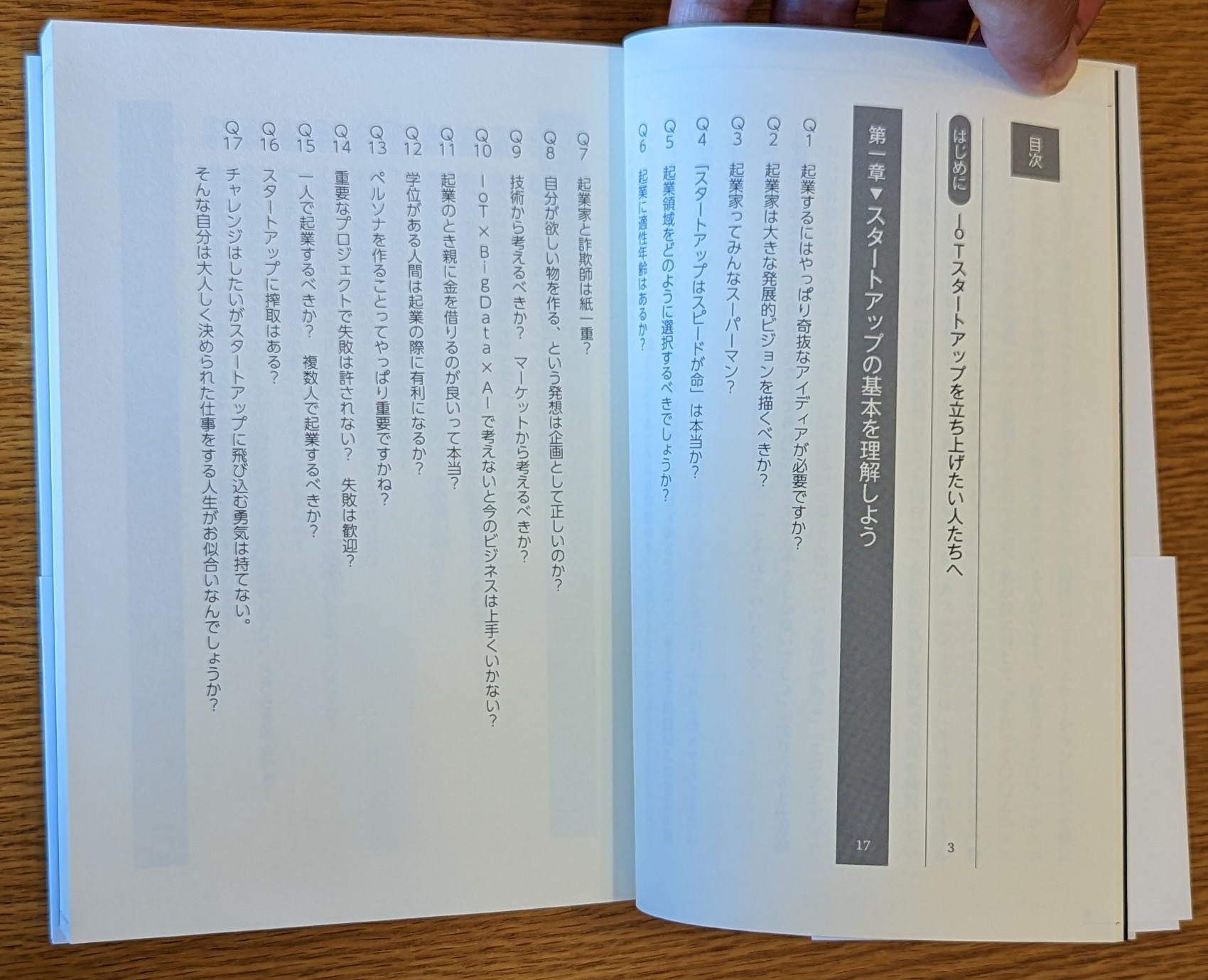
Author Explains The Table Of Contents Of His New Startup Book
Actually, I was writing a book
I’m publishing a book, scheduled for release on May 18, 2022. (Amazon has it listed for 5/20. Bookstores will follow.) I want to use this space to explain and introduce the book’s contents little by little.
The Shape of a Happy IoT Startup
The Shape of a Happy IoT Startup
The book is structured into four chapters:
- Chapter 1: Understand the basics of startups
- Chapter 2: Understand the common troubles of running a startup
- Chapter 3: Understand the typical stumbling blocks of IoT device development
- Chapter 4: Once you think you’ve got a general grasp, level up one more notch
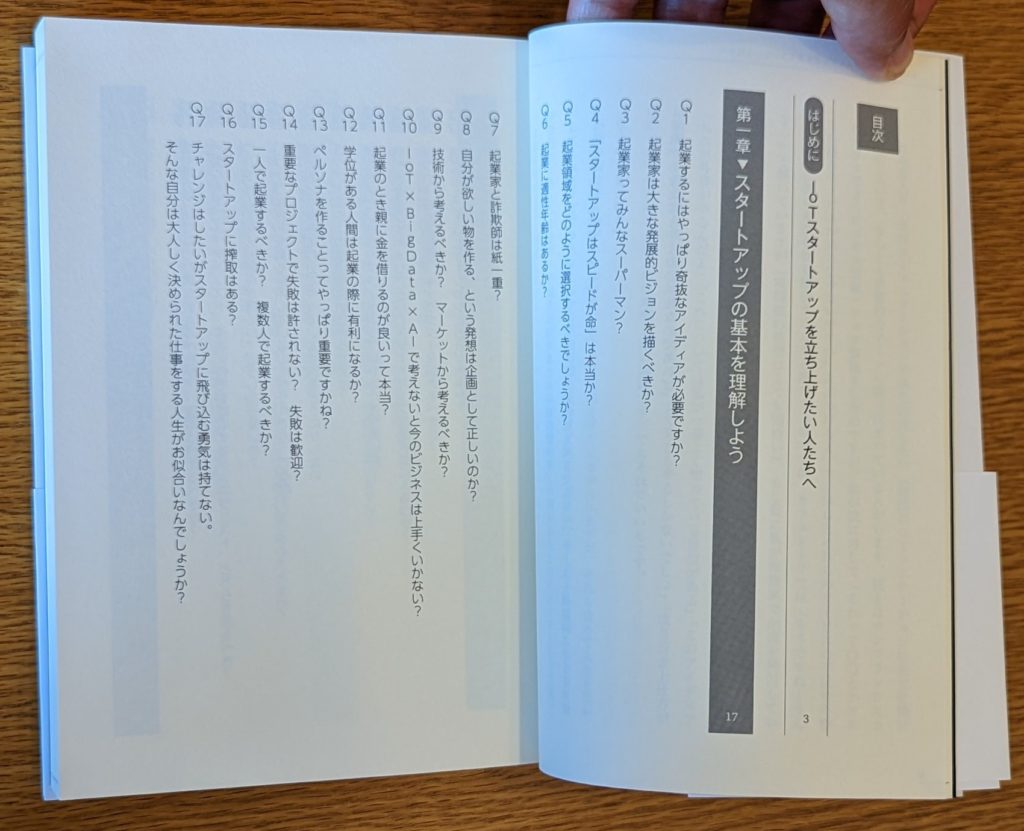
Chapter 1 covers content that applies pretty broadly.
For example:
- Do you need an outlandish idea to start a company?
- Is it true that “speed is everything for a startup”?
- Should you start a company alone, or with multiple people?
Anyone who has started a company has probably struggled with, suffered over, or regretted questions like these at some point. I offer my own perspective and analysis on each.
I also cover questions like:
- Should you start from technology, or from the market?
- Does building a persona actually matter?
These insights should be useful for anyone involved in launching a business or planning products and services in general.
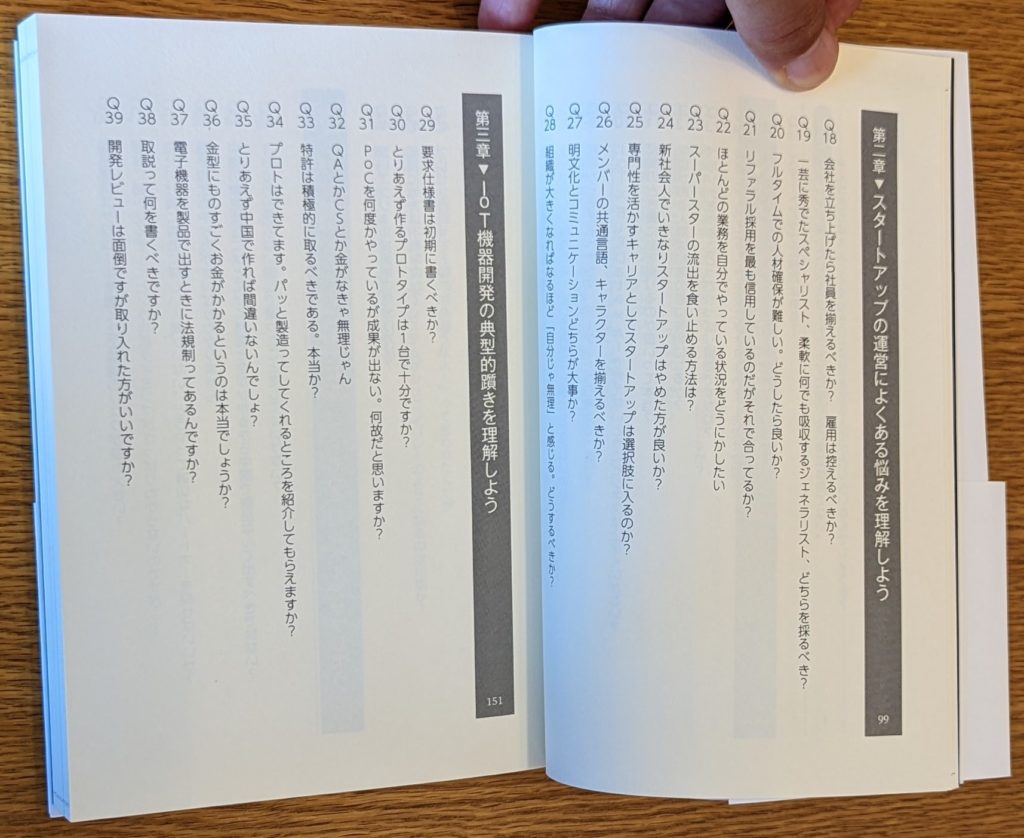
Chapter 2 is about the common troubles of running a startup.
For all the grand talk about “startups,” what you actually have is just an ordinary company that happens to be small and changes at a ferocious pace. There’s the pain that comes from having too few people, and there are the troubles that arise as headcount grows. How should you approach hiring? How should you adjust team culture? I think you can find commonalities across any company on each of these points.
Put another way, a startup makes a good reference point, useful to everyone.
Every day is a treasure trove of trouble (laughs).
Chapter 3 goes deep into the development of IoT products.
Requirement specifications, prototypes, PoCs, quality assurance, customer service, manufacturing, patents, regulations, and so on.
Readers far removed from hardware or product and service development will probably find some of this hard to follow, but I’ve tried to write it so it can still be enjoyed to some extent as “reading material.” File it away as a “huh, so that kind of thing happens,” and pull it back out the moment you find yourself stumbling on something down the road.
For people about to start building IoT products, though, this chapter is packed with genuinely meaningful, concrete benefits. Pay attention.
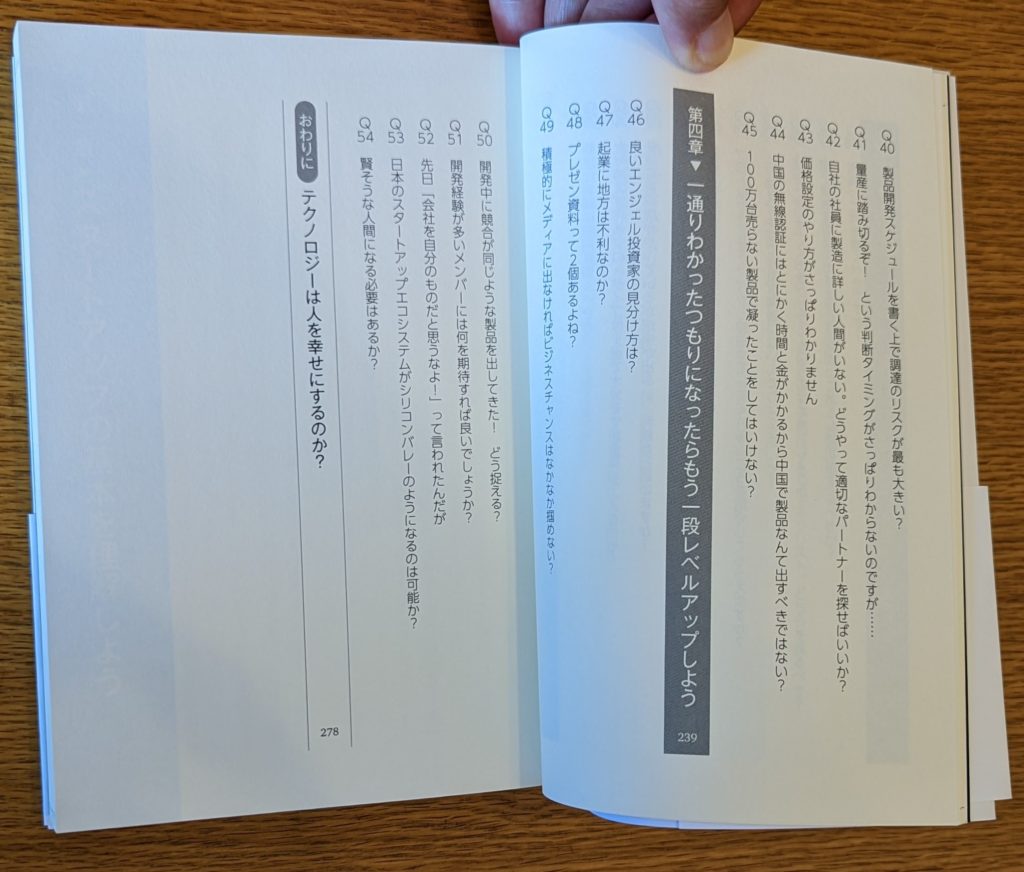
Chapter 4… I’ll admit I’m braced for readers whose background knowledge and experience leave them thinking “I have absolutely no idea what this is about.” I wrote it anyway.
Most of this chapter draws on things that happened to me or the people around me: lessons learned from painful experiences and big failures, or things that made me think “ah, I see” after watching friends who run companies, and people I know, in action.
The whole premise of this book is “the things I’ve said when various people asked me questions or sought my advice.”
Everything written here comes from things that new founders and startup members have actually experienced, struggled with, or stumbled over, and then come to ask me about.
So I think this content will be genuinely useful for anyone about to start an IoT startup, or any other kind of startup for that matter.
Throughout the book, I aimed for something where “even though it’s in Q&A format, you come away with systematic wisdom.”
If any of this strikes a chord with you even a little, I’d be glad if you just gave it a read.
Originally published in Japanese at https://clazytech.com/2022/05/885/. Translated with LLM assistance and reviewed before publication.