Wind and Geothermal Power Lead the Fight to Reverse Global Warming
DRAWDOWN: The Most Comprehensive Plan Ever Proposed to Reverse Global Warming
“Drawdown” is a project-style book led by an American writer, with contributions from researchers around the world. It lays out what can be done to achieve “drawdown — the point at which atmospheric carbon dioxide levels begin to decline,” broken down largely into two parts: an overview of efforts already underway, and an introduction to future technologies. The section on “understanding the current situation” shocked me personally, since it included many items whose details I hadn’t known, or hadn’t even been aware of at all. It deserves to be called required reading for working adults. At over 400 pages in two-column format, though, its actual volume is easily three times that of a typical single volume, and even for me — a fairly fast reader — it took over a month to finish.
Here I’d like to extract and organize the essence of it to some degree. In any case, this is a book perfectly suited to grasping the big picture.
First, let’s look at the energy sector.
1.1 billion people in the world currently live with no electricity at all. Renewable energy is essential to supplying power to them, and this is one reason the map of where technology gets deployed and where investment capital flows has been shifting in recent years.
Wind Power
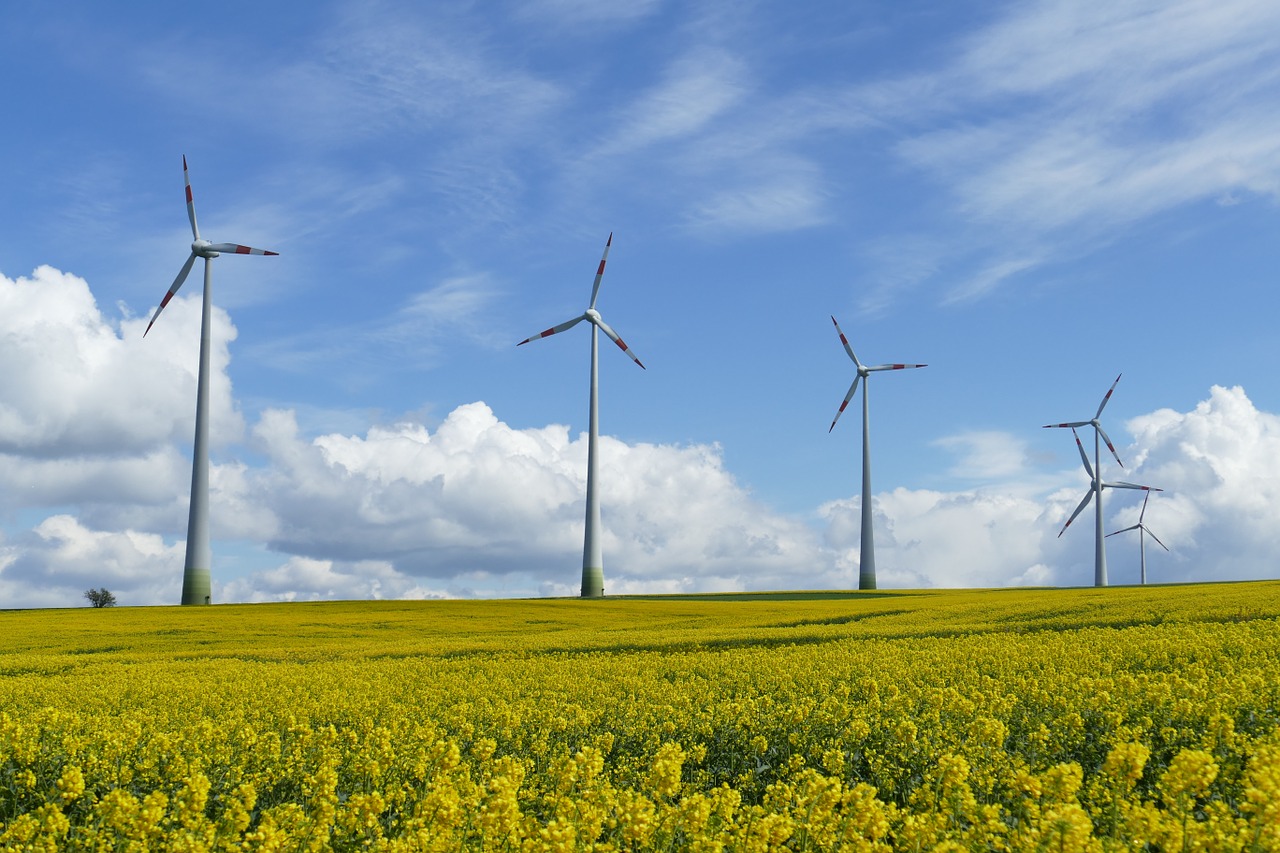
The impact is enormous. In the book’s own calculation of “expected CO2 reduction,” wind ranks second out of all 100 solutions. The key point is that its cost is extremely low. Cost comparisons across different power sources are often published, but they call for caution: fossil fuels receive overwhelming subsidies, and costs like free cooling water go uncounted, which makes fossil fuels look relatively better than they are. In Denmark, wind power already accounts for 40% of total electricity generation.
Geothermal Power
The simple pattern for geothermal power generation is drawing up steam generated by underground heat through pipes and using it to spin a turbine. Geothermal heat is said to exist at 100 billion times the level of humanity’s energy consumption, but locations suitable for geothermal power make up less than 10% of the world (Japan is one of the few such areas). Kenya gets half its power from geothermal. Iceland gets a third, and El Salvador and the Philippines get a quarter — geothermal power is well advanced in these countries. Digging into the ground, however, releases carbon dioxide stored underground, and it demands careful attention to pollution such as foul odors and land subsidence. There’s also a system (EGS) that transports water to locations with heat but no water, in order to generate geothermal power there.
Solar Power
In Italy, solar accounts for 8% of power generation, and in Greece, 6%. Floating solar farms on water matter in particular for suppressing the generation of water vapor, the top greenhouse gas. The first solar panel was made in 1884 — two years before Edison built the first thermal power plant. Distributed solar is especially powerful in off-grid environments (areas with inadequate transmission lines), so the countries actively investing in solar power technology development are gradually shifting. Solar power used to carry a high carbon cost in manufacturing, requiring processes like incineration furnaces, but this has improved substantially in recent years. In 2016, Germany created a stretch of several hours in which solar power supplied 88% of all electricity.
Tidal and Wave Power
This traces back to the oscillating water column originally developed by the former Imperial Japanese Navy. When a buoy moves inside a column, it compresses and expands air, which spins a turbine. It’s an eco-friendly mechanism in a sense, but it faces many challenges — operating long-term in saltwater, avoiding impact on marine ecosystems, and so on. North America has only one tidal power plant, and no one has settled on the best structure for generation efficiency.
Concentrated Solar Power
This is the bold idea of doing on a massive scale what a magnifying glass does when burning a leaf with sunlight. It’s actually an old idea — Leonardo da Vinci is said to have built a giant lens to heat a pool. It faces many problems, though: it has to be built in a capital-intensive way, generation efficiency is poor, and birds get burned to death in midair from the heat. On the other hand, heat itself has the advantage of being cheaper to store than electricity (molten salt storage). Molten salt melts at 224°C. Once it absorbs heat, it can retain it for 5-10 hours.
Biomass Power
This has more power plants than any other renewable energy source. However, some of it involves cutting down forests and burning them, because of a shortage of waste wood — essentially putting the cart before the horse. In terms of the carbon cycle, it’s the closest to natural. But biofuels like corn, poplar, and switchgrass have poor energy conversion efficiency. The process simply has too many steps, and energy gets consumed along the way, such as in transport. Net of everything, they produce only a little more energy than they consume, and policy and subsidies alone keep the whole thing running — it’s likely a method that will eventually be replaced and disappear in favor of cleaner energy.
Nuclear Power
Depending on how you look at it, this is a clean energy source. Prices aren’t expected to fall any further, though, the US has stopped building new plants, and Germany is phasing it out entirely — that’s the general direction of the world. China is currently putting the most effort into nuclear power. Incidentally, NASA’s Hansen — a climate researcher and activist whose papers are cited extensively in IPCC reports — is pro-nuclear. His argument holds that renewable energy still needs more time, and that climate change cannot be stopped without nuclear power.
Cogeneration
This is the idea of reusing what would otherwise be wasted during processing, but power generation makes little use of it. The efficiency of thermal power generation is below 40%, and that of internal combustion engines is below 25%. The remaining energy, in effect, goes toward warming the planet. CHP: Combined Heat and Power In Denmark and Finland, biomass power is generated from wood, and the resulting heat is used for heating. This eliminates the need for cooling water. It should be pursued as a package together with distributed power generation, which is why it tends to be government-led. The US lags significantly behind in this area.
Small Wind Power
In fact, about 1.1 billion people around the world rely on small-scale wind power to live. Small turbines are less efficient, but they’re low-noise and don’t spoil the view. High elevations are advantageous, so builders sometimes install them as backup power sources on buildings — the Eiffel Tower is one example.
Small Hydropower
It’s cheap, easy to maintain, and has a low environmental footprint. Mountainous areas mostly use it off-grid, but urban areas have conduit hydropower installed on main water pipelines (Portland). The stage is still early, though, big companies are absent, and the startups tackling this have left many problems still to work out — damaging the flow of waterways, or being unable to withstand increased water flow.
Methane Digesters
When organic matter decomposes, it produces methane. The practice of gathering food waste and having microorganisms break it down to produce gas used as fuel dates back over a thousand years. Many developing countries also fix methane and put it to use.
Waste-to-Energy Incineration
It’s the worst idea conceptually, but Sweden does it even to the point of importing garbage. It emits carbon dioxide. It also emits an enormous amount of particulate matter, along with mercury, lead, and cadmium as a matter of course. But many countries, especially those with little land, want to burn waste to solve their garbage problems. Filtering and reprocessing technology nominally supports this — for instance, charging particles with electric filters to make them fall out. Burning waste is cheaper than recycling it, and it also reduces the amount that goes to landfill. Since landfills generate methane, there’s a certain logic to the argument that establishing clean-burning technology could reduce methane emissions.
Pumped-Storage Hydropower
This involves moving water up to a reservoir when there’s a surplus of electricity, then releasing it to generate power when demand is high. There’s also a version on mountains where cargo is hauled up top and power is generated from the friction of a rail regenerative brake.
Solar Water Heating
A quarter of household energy use goes toward hot water, and generating hot water directly with solar heat saves electricity. In Cyprus and Israel, installation is mandatory in homes, but high upfront costs and installation effort remain challenges.
Smart Grids
Geothermal, hydro, and biomass are steady energy sources available year-round without seasonality. Solar and wind, on the other hand, depend on climate and vary widely by time of day and season. A new grid structure is needed to integrate these sources and stabilize the power supply that underpins social life.
[New Technologies and New Attempts]
Fusion Reactors
TAE Technologies: Irvine, California Rather than the conventional tritium-deuterium fusion, they’re pursuing fusion of hydrogen and boron. Conventional methods produce neutrons and gradually contaminate the fusion reactor with radioactivity, but hydrogen-boron fusion is completely clean. The required temperature, however, is 3 billion degrees Celsius. 18 years after founding (the founder has since passed away), the company achieved plasma stability, spinning it like a top. The plan is apparently to reach the high temperature using the force of the plasma’s rotation.
Artificial Photosynthesis
Nocera: a researcher at Harvard Feeding high-pressure carbon dioxide to a catalyst and bacteria produces hydrogen energy at ten times the efficiency of photosynthesis.
Wave Power
Developed by a company in Seattle. It’s a very simple structure in which distance variation caused by waves between a float and an anchor generates electrical pulses via magnets, converting them into electricity. Cost alignment for maintenance, power transmission, and so on is still lacking. Even so, the ocean’s kinetic energy is said to hold a hundred times the potential of the electricity currently needed by the world’s population.
Kelp
Soy-based biofuel produces four times the CO2 emissions of fossil fuels. Kelp is a promising alternative. Georgia Tech has developed a technology that uses alginate extracted from kelp to increase lithium-ion battery storage capacity tenfold. There’s also a grand plan proposing that turning 3% of the world’s oceans into seaweed farms could cover all of humanity’s energy consumption.
Originally published in Japanese at https://clazytech.com/2021/12/813/. Translated with LLM assistance and reviewed before publication.