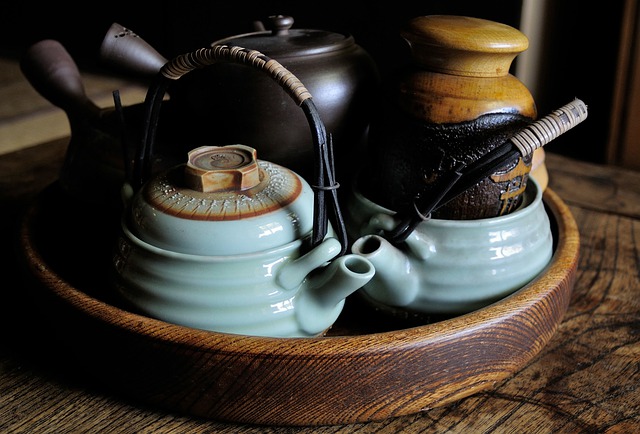
Sōetsu Yanagi's 'The Way of Craftsmanship' Still Speaks a Century Later
The trigger was the “Book Cover Challenge,” popular during the self-restraint period, which eventually made its way to me. I dug a bit deeper than “books I like,” landing on “books I somehow can’t throw away.” Since leaving my parents’ house for work, I’ve moved eight times: four within Hamamatsu, twice within the US, and twice between Japan and the US. Because of that, my belongings are close to minimal. I’ve disposed of a considerable number of books too. Given that, the books that keep surviving really do settle down to just a handful. “The Way of Craftsmanship” (Kogei no Michi) was one of them.
Sōetsu Yanagi, “The Way of Craftsmanship” (first edition 1929, revised 2005)
Not many people may know Sōetsu Yanagi, but I’d guess many know Sori Yanagi. Sori Yanagi is famous as an industrial designer and often comes up in connection with the Olympics, among other things. Sōetsu was his father. I say many people may not know him well, but that’s simply because Sōetsu belongs to an earlier era. He was in fact a famous religious philosopher who received the Order of Culture, and the central figure of the “Mingei (folk craft) movement” that arose from the Taisho era into the early Showa era. “The Way of Craftsmanship” compiles Sōetsu’s writings and magazine contributions from around 1920-30. Put simply, the Mingei movement took a stance that moved away from luxury-oriented art and pursued the beauty found in more modest, simple, ordinary objects, and it’s fair to say it left a definite mark on the later field of industrial design. For details, check Wikipedia as well.
Rereading it 15 years later, this book—now a century old—turns out to be astonishingly rich in insight. Weaving together what I’ve experienced over these 15 years with Sōetsu’s context produced a new context of its own. Needless to say, I’m not a craftsman, so I read it substituting in “engineer” and “making things” throughout.
We are now living in the future this book, written 100 years ago, expressed concern about. Unfortunately, the past sage’s warnings have become exactly the present we are tracing (I felt the same thing reading Eiichi Shibusawa), and I can’t help feeling strongly pressed both to be chastened for our folly and to hold a clear vision and concrete strategy for the future.
The Definition of Craft
At the time, the categories of fine art, craft, and additionally craft-art had emerged. The pace of change was accelerating, definitions were vague, and new things were being born and forgotten without culture being elevated—wait, is this a story about the present day? No, no, this is Sōetsu talking about 100 years ago.
In one Q&A, Sōetsu answers as follows.
Q: What is the beauty of craft?
A: It is beauty that follows use.
Service to use—this is the heart of craft. A closeness that serves as a daily companion is the nature of craft, Sōetsu says. Craft stands as the polar opposite of so-called fine art. Fine art has been highly valued since the Middle Ages, and that’s fine as it is, but couldn’t beauty also be found in the various objects in the hands of ordinary people? This was the question Sōetsu and his fellows posed to society.
At the time they collected many vessels they called “gete-mono” (rough goods) (a neologism coined at the time as the antonym of “jōte-mono,” or fine goods), and they found beauty in works by prolific, anonymous makers, not so-called one-of-a-kind pieces.
The strengths of folk craft
- Never departs from use
- Is inexpensive
- Can be made in quantity
- Serves the masses
- Has no disease of technique
- Is without ego
- Is simple, natural, without artifice
The existence of a vessel must not be for a human being to speak of themselves. It must be a monument to nature.
Craft-art is sometimes said to have branched off from craft, but given its strong individuality and high pictorial quality, it’s more natural to think of it as a branch of fine art.
As an engineer making products, I look at all sorts of competitors’ products in the course of competitive analysis, and among them I do sometimes sense beauty. Take a PCB, for instance (a bit of a niche example): one designed so that technical rationality and visual honesty coexist, with no waste, an orderly layout where all sorts of information comes through at a glance without even looking at the schematic. Seeing something like that can really move me.
I also occasionally play bass on stage, though that’s dropped off sharply since I came back to Japan. I’m something of a hack bassist—I can’t read sheet music, and my grasp of music theory is half-baked. When it comes to actually performing, most of it is improvisation. So as not to fall back on mere habit, I listen to the other members and think things through while playing, sometimes calculating in detail (performing is mathematics—in fact, since my skills aren’t sufficient, I often don’t know the answer and end up doing mental arithmetic mid-song). But the times I play well are usually the times I don’t think about all that too much, and instead entrust everything to the natural flow and some larger will. I do have that experience. To put it presumptuously, isn’t this what’s called selflessness (muga)?
What Is Beauty
Beauty is not entertainment. It is the great foundation that makes for a true life.
Also, the laws of beauty know no old or new. Reverence is not toward the past, but reverence toward eternity.
The beauty of craft is “healthy beauty.”
Sturdy, without unease, possessing quality and stability. Free of sentimentality, decadence, disease.
Self-centered feeling is not permitted. It is a beauty of service. A beauty of grace.
Plain things often radiate beauty. “Simple” is not “monotonous.”
Kabir (the poet): “Simple union is the best.”
The first generation of tea masters recognized a special beauty even in small flaws and distortions. “Shibusa” (austere beauty) is a robust beauty.
The claim that beauty is the foundation of life feels like a great salvation, doesn’t it? It also reads as a message to raise the resolution of one’s consciousness: to notice small things, cherish them, be satisfied—that such a life is beautiful.
Sōetsu praises the “first generation of tea masters.” At the same time, he squarely criticizes the tea masters of later generations. This is a very interesting point: in the early days of the tea ceremony, fresh perspectives and insight, including “shibusa,” found value and beauty in things thought worthless. This must have been an extremely rare undertaking. But the later generations of tea masters, he says, only made use of the templates their great predecessors had built, doing nothing but sullying them with “power” and “money.”
This criticism might resonate with the field of industrial design. Especially with smartphones, screen UIs, and by extension UX, there’s an undeniable tendency to treat tracing a certain template as the correct answer. Is that really beautiful? Is that really correct? We must not forget a philosophical, critical stance that keeps throwing that question at ourselves.
The Contrast Between Fine Art and Craft
Fine art becomes more beautiful the closer it approaches the ideal; craft becomes more beautiful the more it mingles with reality. High-level fine art stands aloft; high-level craft is intimate and near at hand.
Fine art is the way of genius, the way of understanding, the way of individuality.
Craft is the way of the people, the way of no-mind, the way of self-forgetting.
However, self-forgetting is not the negation of individuality but its liberation.
Arrogant knowledge is a sin in the world of beauty.
Arrogant wisdom is a childish wisdom. One should know how powerless one is before nature.
That a made thing lacks beauty is the retribution for having turned against nature.
Those who assert themselves and are proud of their knowledge are called the smallest before God.
The individual artist requires genius. But genius is a rare thing. After that genius departs the world, do we wait for and entrust ourselves to the next genius?
In the personal work of a genius, much technical strain inevitably arises.
Sōetsu doesn’t say which of fine art or craft is better or worse. His point: don’t equate them, understand each one’s own path. But 100 years ago wasn’t so distant a past after all, and that era was still called “medieval.” His indignation at the tendency to prize wealthy, luxury-oriented fine art comes through in places. I think even now that hasn’t changed all that much. Luxury-oriented fine art is both a useful investment and, as a certain kind of status symbol, satisfies the desire for ownership, a market product with characteristics rather foreign to ordinary people. Even limited to what’s publicly disclosed in Japan alone, annual transaction volume is said to be around ¥300 billion, so it’s a decently thriving market. But how much of the population, proportionally, benefits from this sort of “THE fine art object”?
Do you see it displayed at the entrance of a luxury hotel? Do you view it in a museum?
Surely there should exist, far beyond that scale, regardless of country or region, for rich and poor alike, a beauty that, small though it may be, is genuine, tangible, something to be a daily companion. This is an extremely hopeful proposal.
The Right Way to Relate to Machines
Those who defend mechanization always say, “Population will explode from here, so this is a reasonable response.” And they say, “As mechanization advances, output will increase and things can be provided more cheaply.”
But looking at the present situation (100 years ago), machines have produced competition, competition has brought oversupply, and the unemployed have increased.
Has anyone become happy? Only a portion of capitalists into whom wealth has concentrated.
The masses have grown poorer, and society has been stained vulgar.
What have the machines that promised happiness to a growing population actually done to us, other than create even greater insecurity in life?
Machines are an aid to human beings. When that master-servant relationship is reversed, ugliness runs rampant.
I’m not saying to eliminate machines. I’m saying to put people back in the master’s seat.
A culture that ignores machines cannot stand, and I don’t deny that machine-made products have a peculiar beauty of their own. At the same time, a culture in which humans become slaves to machines cannot stand either.
Therefore society should not demand machines without limit.
If the application of human wisdom leads humanity to unhappiness, is it foolish to have the courage to abandon it? Are we permitted to be caught up in the fact of having “developed” and close our eyes to the unhappiness born from it?
To say that hand-work has ended because machines were born is the same as assuming that religion is unnecessary because science has developed.
The more scientific the age becomes, the more the meaning of faith ought to be reconsidered.
As is clear from economic analysis, mechanism has impoverished the masses.
Mechanism would not have developed to this extent had it not been for the capitalist system.
Sōetsu champions hand-work, likely because thoroughgoing mechanization was advancing at the time, 100 years ago.
Not just at startups but throughout my career, I think I’ve been continuing to “launch a business” or “launch a new product category” as a kind of lifework, breathing it as naturally as breathing. In that kind of activity, a self-critical stance matters a great deal. “Is this product or service really necessary?” “Who does it make happy? Is there no other way to bring about happiness?” I often find myself carrying on a half-twisted internal debate along those lines. And in the middle of it, a question like this has come up.
“Is technology really making people happy?”
“Who decided that economic growth is correct?”
I can imagine the retort “that’s such an edgy teenager thing to say,” and it’s fair; and if someone called me “socially maladjusted,” that would be accurate too. But this too is part of who I am.
I think someone like Sōetsu is respected precisely because, within a critical approach, he properly systematized his theory and carried its conclusions through into actual activity. Otherwise this sort of talk would be nothing more than the ramblings of an idle layabout.
Capitalism and Guild Socialism
Why does capitalism kill the beauty of the people?
Because things are made for profit, with use as secondary.
The beauty of craft cannot be born from the capitalist system.
All ugliness stems from a collapsed social organization.
There we find:
Violence, but no mutual affection.
Only slaves, no brethren.
Only the negation of personhood, no freedom.
Only estrangement, no union.
Only class struggle, no mutual support.
Only insecurity of livelihood, no stability.
Only the gap between rich and poor, no equality.
The purpose of goods has shifted from service to greed for profit, and labor has turned from sincerity into suffering.
All that can be seen is vulgarity that panders to the public and shoddiness serving only oneself.
Craft and guild socialism have a great deal in common.
This is not an anti-economic idea; there ought to be a point of agreement between economic growth and the development of craft.
I’ve organized this in more detail elsewhere, in the piece “Why Liberalism Failed.” https://www.clazytech.com/2020/10/369/
Should we call it insight, that this perspective already existed a hundred years ago? Or should we take it that history repeats and we’ve been placed on the same rails without any reflection at all? If Sōetsu saw the present day, what would he say?
What Is a Guild
A guild is a group bound together by the power of fraternal love.
There is an order based on morality, and that morality permits no wrongdoing in quality, process, or value.
Because of that, it earns social trust, and there is stability in it.
It aims not at “the realization of individuality” but at “the realization of an integrated humanity.”
The fellowship does not exist for the sake of livelihood; rather, livelihood exists on top of the fellowship.
The fellowship is an idea (idea).
Capitalism seeks bondage without order; individualism seeks freedom without order.
What one should seek in fellowship is order.
The shift from individualism to a doctrine of union.
Indeed, many of the great works of old were collaborative. We must build a great road that anyone at all can walk.
The rightness of a vessel demands the rightness of a system.
Once, the world was such that:
People helped one another and protected happiness.
Respect was visible and courtesy was maintained.
Society kept order, and the guild was firmly protected.
Profit enriched the fellowship rather than the individual, and saved the poor.
The master loved the apprentice, and the apprentice respected the master.
As a result, life was well-ordered, prices were supported, and the economy was stable.
There was attachment to one’s work, and the heart was devoted to making things rightly.
Gain was merely the gentle reward that accompanied this.
The maker was, in most cases, identical to the one who ran the business, and was also one of the users.
Even if, as the guild socialists say, guilds were made to control the market, what awaits next is conflict between nation and nation, and machines end up being used in the pursuit of that victory.
I believe that any effort to rebuild the beauty of craft under a capitalist society will end in futility.
I also abandon the patience to expect the beauty of craft from the individual path.
I expect the beauty of craft only from the fellowship.
A group of seekers of the way is called a monastery. A robust beauty.
One’s own salvation is a joy, but it is the smallest joy.
Just as individualism cannot stand within religion, individualism holds no high value within beauty either.
The idea that forming a collective could be one answer to capitalism is, again, exactly what was laid out with examples in “Why Liberalism Failed,” mentioned above. Pushing that further as an economic subject, Sōetsu’s own distinctive claim seems to be that we probably need something like a professional collective with guild-like characteristics.
The Stance a Craftsman Should Hold
If there is beauty in making a rare thing, then even more beauty is added when making an ordinary thing.
If you feel joy upon creating a work that no one else could make, you are far removed from beauty.
If you look at beauty and become conscious of beauty, that is still secondary. Happiness comes when you enter into beauty and forget beauty.
Great quantity approaches forgetting.
Make much, and make quickly.
A lively, natural momentum is thereby obtained.
In silence, hear the words of nature, and enter the realm of peace and stillness.
If one deliberately aims to make the ordinary, that in itself is already rare.
The craftsman must live in an ordinary state of mind.
Making in quantity brings low cost and lets the work stand up to use by the masses.
And departure from special self-consciousness, wastelessness, simplicity—these are the reward that quantity brings, and they lead to beauty.
One might think the individual path is freedom itself. But religious experience teaches again and again: there is no freedom greater than submission.
Submission to order, submission to nature—freedom exists together with responsibility.
The beauty of order over the beauty of individuality.
Rightness is possible only when one conforms to the laws of nature and organization.
There is no true self without entering the great self.
When one does so, one is no longer confined to individual limits.
In medieval Christian art there is a word, “infallibility.”
Infallibility produces no error. May craft be so as well.
Infallibility. If leaving things to nature produces no error, why assert the ego? This is Sōetsu’s question. Trust nature, make use of the material, accept things as they are, and coexist: what is gained this way is the richest of all, yet if we go out of our way to twist that and force out an answer, that only intensifies the “disease” all the more.
On this point, there does seem to be something like a process of human growth. In my younger days, I don’t think I was much of a standout character within any group. Not in the sense of good grades, or being put in charge of student council, or captaining the soccer team, but in the question of whether I was a so-called “cool guy.” I probably did feel a sense of not being cool, and at times probably felt indignant about it. I’m sure. (I don’t remember it all that well anymore.) I fussed over my clothes, dyed my hair. I never rode off on a stolen motorbike, but I do remember groping around for direction and trying various things. Now, in my 40s, though? I think a haircut is fine as long as it’s short and clean, and I only keep a beard because shaving leaves my skin looking blue, which is more unpleasant than just growing it out. I’ve been like this for about ten years now, so I don’t care at all anymore how people around me see it. My clothes have inevitably become more monochrome, and I care more about comfort than brand names. I have zero interest in chasing trendy business ideas; instead, what I want to do is genuinely help the world, or make society even slightly better. Whether or not I can raise funding, either is fine with me. Either way, I already have the skill and know-how to make happen whatever I decide to do. At that point, whether I stand in front or work behind the scenes, whether my name shows up or not, none of that matters either. If possible, I’d rather not show up, since it’s a hassle. It’s all very natural, without strange affectation or greed. And I find that “cooler.” My 20-something self would be shocked to hear this.
What Is Happiness
Paul: “The wisdom of man is foolishness before God.”
When one abandons the small self, one can live within the great self of nature.
The vow in Buddhism.
We should not try to save ourselves, but must entrust our whole being to the Buddha who vows, no matter what, to save us.
Let us abandon the erring self and entrust ourselves to nature.
There is no lapse and no error in the will of the Buddha.
We should not try to guarantee happiness by shortening labor; rather, we must change the circumstances so that meaning is felt in labor.
Labor has, at times, joy, and at times, suffering. But this must not be made its meaning.
Perfect labor forgets both pleasure and pain.
”A day without work is a day without food”—oneness with life.
Labor is a duty imposed on human beings. Happiness is its gift.
Religion is cautious with the words “I” and “mine.”
There is no path forward through the negation of the self.
To deny the self is foolish, and to have a self is wise. But it is only in self-forgetting that one first becomes holy.
True wealth can be nothing other than noble poverty. The laws of religion are also the laws of craft.
It even seems as if we, in the present day, have long since leapt across the chasm Sōetsu lamented, and have gone somewhere from which there’s no returning. At the outset I mentioned that, being an engineer, I read this substituting “making things” for “craft.” But since this is a story from 100 years ago, re-read what was written in the context of “machines” as being about “AI,” and this too, I’m sure, will really hit home. And surely we too will lightly leap across this chasm and head for depths from which there’s no turning back.
The Madman Ruskin
Among the figures Sōetsu drew on while taking a squarely critical stance toward them is a medieval thinker named Ruskin. Objectively there’s no problem treating them as belonging to a certain lineage. But Ruskin’s moral demands regarding beauty were high and severe, and unfortunately markedly unrealistic.
That said, as Sōetsu also points out, unlike the countless other dreamers, what deserves high praise about Ruskin is that he actually put his seemingly unrealistic ideal into practice.
Regarding the utopia that the “Guild of St. George,” which he actually founded, tried to put into practice:
- No steam engines, no railways
- All living creatures are protected
- There may be the sick, but nothing miserable
- Death cannot be avoided, but idleness is not tolerated
- There is no freedom; there is obedience to a clear law or to a certain person
- There is no equality; the good is recognized, the bad is refused
- Even the poorest farm is given sugar
- No orange peel, no eggshell is left to waste
- No feast is set on the table if one doesn’t know how to cook it
- Everyone is well-versed in natural history, Latin, and history
In this way, Ruskin came to demand an extremely strong ethical order of society. But it was clearly too lofty, and reality, in the end, could not keep up. The madman Ruskin tried to elevate the world to an abnormal height. But that can also be read, conversely, as the unfortunate outcome of having given up on elevating society in a way grounded in reality.
Bonus: The Points Summarized in a Few Lines
To summarize concisely, in a few lines, what Sōetsu was arguing:
- Fine art and craft differ greatly in their spirit and in the beauty they pursue. We should take more interest in the beauty of craft.
- The beauty of craft is very close to us, a familiar beauty present in daily life.
- Beauty is born from the fusion of a spirit of service and selflessness.
- Individuality should be put to use not for competition but for the cooperation of the collective.
- A lively spirit dwells within appropriate constraints and responsibilities.
- Mechanization is an inevitable trend of the age, but we must never forget that machines are, first and foremost, an aid with humans as their master.
- Capitalism has only produced disparity and insecurity, and has not made people happy.
- Only an ordered fellowship can resolve this situation.
Originally published in Japanese at https://clazytech.com/2020/10/385/. Translated with LLM assistance and reviewed before publication.