I Dislike The Sharing Economy, And Here's Why

I hold a somewhat negative attitude toward the sharing economy. What follows is a long piece. If the title already irritated you, you probably shouldn’t read on, because it will only irritate you further. When I wrote “somewhat” at the start, I meant it in the weaker sense of “in a limited way,” or in the stronger sense of “mostly negative, but not entirely.” I think this will be hard to read unless I untangle that distinction first, so let me start there. Now, the sharing economy can broadly be divided into
- sharing of assets
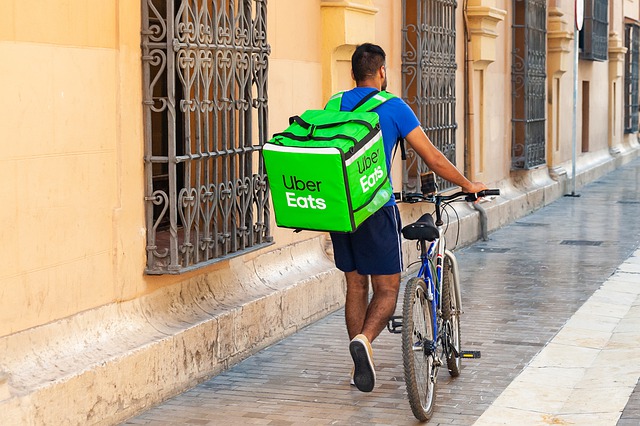
- sharing of labor I think these are the two categories. I won’t accept the objection that “labor is also part of the assets a worker holds.” That’s because the two are fundamentally different in both philosophy and economic structure, and it’s precisely that boundary that clearly divides my “like” from my “dislike.” Asset sharing began, in its early days, from the idea of “putting idle assets to use.” The representative example of this is Airbnb. Airbnb offered people who owned multiple properties a new way to monetize them, and it offered users relatively cheap lodging. Gradually, various offshoots emerged: properties bought for investment purposes being rented out through Airbnb, vacant units in apartment buildings being used, and so on. This is pure growth of a legitimate business category, the product of the market’s own ingenuity and effort, and it is beautiful. A closely related derivative model here is the shared office, and extending the concept further, we get things like shared bicycles and shared kick-scooters — the idea of lending out “practical assets one has acquired,” not limited to real estate. Since these can be seen as an evolution of what used to be called rental businesses, it’s hard to call them an entirely new idea. Still, I can’t help but admire how a “rental such-and-such,” once confined by physical constraints, has expanded with the help of technology to a scale capable of capturing a much larger market. Some categories succeed and some don’t. Fit with the market matters enormously (for instance, shared bicycles, which are absurdly popular in China, still haven’t taken off in Japan). But it’s genuinely satisfying to watch various people take on various challenges in this space, refining their approach as they go. So, as should be clear by now, these fall into the “like” category. I don’t feel compelled to start one myself, but I at least respect the people who came up with these businesses, and I want to cheer on the people currently dreaming up new variations. So, what I want to take issue with here is the latter category — “sharing of labor.” The representative example here is Uber, but the list of examples that followed is endless. That’s because the sharing of labor is, at its core, built on the idea that “work that used to be done by professionals is now done by amateurs in their spare time,” and this concept can encroach on virtually any domain. Taxis like Uber, food delivery like DoorDash, valet parking, cleaning, laundry, dry cleaning, holding a place in line, etc. Practically everything became a target for this kind of sharing service. I grew sick of it. This was around 2014–2016. It’s one of the reasons I stopped feeling much resistance to leaving Silicon Valley, that paradise and battlefield for engineers. I don’t sense any dignity in these businesses. First, the majority of the workers providing the labor are not happy. (I knew a fair number of people who actually worked as drivers, so while there’s naturally some bias in my sample, I don’t think this is a baseless generalization.) As I’ve written in another post, I believe the core of a good business is satisfying every stakeholder, and a business that manages to do that is a beautiful one. Take Uber as an example. The first thing that strikes you when you try it is the overwhelming cheapness. Taking a regular taxi from SFO (San Francisco Airport) to where I used to live cost, if I recall, at least the high $40s, sometimes around $60. With Uber, it was $20–30. That was the pattern throughout. From the nearest CalTrain station to my house, Uber almost never ran over $10. What makes this dramatically low pricing possible is Uber’s system — advanced, or at least reasonably useful — combined with low wages for workers. Recently in Japan too, fewer people are choosing to belong to a company under a contract-based arrangement, or to live as freelancers. There’s an implicit convention in that world: “Irregular, unstable employment arrangements should be compensated at somewhat higher rates than regular employment.” Contract work can be terminated far more easily than regular employment, and sole proprietors typically have to shoulder insurance, pension contributions, and other expenses entirely on their own. So if they aren’t paid more, they’re in trouble. And yet Uber drivers receive wages lower than the going rate. Why? One reason is that they haven’t received professional training, and as a result service quality isn’t necessarily high. Just the other day, someone posted on social media, and it went viral, about a $30 bento they’d ordered through Uber Eats arriving completely flipped over and smashed. Trouble like this is always bound to happen. But here’s the crucial point — something anyone who has actually used a service like Uber on the ground will recognize. Many of the drivers are immigrants, and more specifically, an extremely high proportion have no steady job. I don’t mean people who choose not to have steady jobs. I mean people who cannot get one — the unemployed. Framed as a nice story, you could dress this up as “giving the unemployed a new way to earn income,” but the reality is different. My memory of the US isn’t updated with much frequency after 2016, so my impressions are mostly from before that, but the crucial point I want to raise here, the sense of unease, the inexpressible anger, is this: “Isn’t there an invisible coercion at work within this so-called free market?” Put more bluntly: it’s exploitation. They arrive at these services through something close to a suspension of thought, the only kind of judgment possible for someone stripped of any option except “low pay, but better than nothing.” Eventually they weigh the effort against the return, grow disillusioned, and either rise up in protest or fall into a further suspension of thought. I understand the objection based on personal responsibility — “they chose this themselves, so it can’t be helped.” But once you notice that many of them are Hispanic or immigrants from other marginalized countries, it becomes very hard to believe this is a market where free will was operating in any full sense. Some might say, “So what’s wrong with that?” Exploitation that wears the mask of free will while exploiting inequality has, after all, always existed throughout history. For example, in the US during the Civil War era, there was conscription, but apparently it was possible to pay someone else to serve in your place. Afterward, prominent figures in American business and politics were said to have all made use of this “delegation.” Naturally, it was the poor and immigrants, people in weaker positions, who accepted the arrangement. That “delegation” system was, unsurprisingly, extremely unpopular, and what came next was a volunteer system that also allowed non-citizens to volunteer — once again a policy precisely aimed at immigrants. Serving in the field was directly tied to obtaining a green card. And yet, I don’t think there’s quite enough material to openly declare, “This debased the value of their lives and constituted exploitation!” Still, something about it doesn’t sit right. This lingering unease is very similar to the aversion I feel toward the labor-sharing economy. For anyone who has read this far without feeling the same unease I do, let me pose this question. Would an engineer who works at Uber ever think, “Maybe I should drive for Uber after hours too”? A side note here. Among the people I met directly through Uber, there was an old man who said he’d started driving thinking, “I wondered if there was something more I could do in retirement.” Long drives tired him out, so he only drove locally, from after lunch until around 3pm, before the rush hour home (which meant he usually had one or two passengers, three at most). He said what he enjoyed was chatting with the strangers who rode along. If I remember right, he was a Dutch immigrant who had been a physics professor. He was obviously doing this without any concern for profitability. If this had been packaged as “a service selling a lovely experience,” I think it could have landed somewhere better. In that sense, maybe Lyft (my neighbor back in the Miselu days) is showing one possible path forward. Now, let’s shift perspective a bit and think about the very notion of “sharing” itself. Actually, this was a question a friend originally posed to me, and it was the trigger for this whole train of thought (or rather, this encounter with memory and reorganizing of concepts). In Japanese, “share” corresponds to 共有, meaning to divide something with someone. A common use with children is in a scene where they’re fighting over a toy, and you tell them, “Share it.” You might encounter a “shared folder” at work. That’s a folder containing files that anyone can freely view, and in some cases even freely modify. Now, there’s a sense embedded here of something like “free of charge, unrestricted, open.” Looking up “share” in an English dictionary, I found this: a part or portion of a larger amount which is divided among a number of people, or to which a number of people contribute. So here too, I sense a meaning of dividing something surplus or something too large among everyone. This is exactly the feeling I have toward asset sharing. With Airbnb (there are surely many exceptions), it started from the sense of “share” — someone holding an idle asset thinking, well, since I’m not using it anyway, why not let someone else use it. That fit together with consumer needs like “hotels are too expensive” or “I can’t find a hotel,” and it clicked as a business. But what about labor sharing? The people involved (again, there are surely exceptions) aren’t living comfortably and doing this without regard for profitability. Despite preferring to have a steady job, they landed here without any real freedom of choice. If this arrangement had brought them income high enough that they’d think, “This is way better than having a steady job,” it would have been worth examining. Unfortunately, that isn’t what happened. (Perhaps there’s been some improvement recently.) In fact, Uber has repeatedly surfaced serious problems in its relationship with drivers, who are an extremely important part of its stakeholder base. But in a labor market governed by structural inequality, the service will likely keep running fine even under a stance of “there’s always someone worse off than you; if you don’t do it, someone else will.” If anything, competitive pressure kicks in and only widens the house’s margin further. Looking at the demand side, I notice another negative point. How much social debate has there really been about taxi fares becoming irrationally inflated, or about the supply-demand balance for taxis collapsing to the point where you simply can’t catch one? I won’t say there’s been absolutely none (there’s some seasonality around events, and some regional variation), but it’s hard to believe there was ever a socially critical problem there. In other words, these services mostly look like ones that came to disrupt an existing market by offering “a bit more convenient” or “a bit cheaper,” and their contribution to stakeholders is limited and unbalanced. It’s genuinely lamentable. But later services follow the successful examples that came before them. Inevitably, everyone imitates them — including the style of exploitation. To begin with, opinions split when evaluating whether something is socially right or wrong, because that turns into a question of philosophy. (Incidentally, philosophy is a troublesome discipline, characterized by the fact that it never, ever ends.) A typical split, for example, is between libertarianism and utilitarianism. I’ll leave the detailed definitions of each to specialist texts, but put simply, it’s a question of whether you prioritize “freedom” or “utility.” From the libertarian standpoint, the crucial question is simply whether anyone’s freedom is being obstructed. From that standpoint, no freedom is being obstructed here at all: the service provider, the driver who uses the platform, and the passenger who uses it are all choosing “it” in a situation where other options exist. The driver isn’t a professional driver to begin with, so they’re free to work part-time at In-N-Out or take a job cleaning buildings instead. They could get a scholarship, go to Stanford, and become a software engineer. Passengers, of course, are equally free to take public transit, an unlicensed cab, hitchhike, or travel however they like. So nobody’s freedom is being obstructed or constrained. Libertarianism, long live capitalism. That’s the stance. On the other hand, from the utilitarian standpoint, the important question is whether overall utility, viewed across the whole system, has increased. Which is to say: the service provider has clearly built a big business, so its utility has plainly risen; passengers are happy to get cheap transportation. Drivers may have some complaints, but they’re earning a certain amount of money reliably. There may be further demands, like social security, but the utility lost by not meeting those demands is small relative to the whole. Summing all of this up, the net effect should be roughly positive. Some complaints and sacrifices are unavoidable, but overall utility is being optimized. Society is improving. Long live that too. Hmm. Neither position quite catches on what’s bothering me. So what exactly is it that bothers me? I think this is a matter of morality and reason. But words like that sound a bit grandiose, and they tend to put the listener on guard, as if I’m about to hurl some thorny puzzle at them. So when I bring up this kind of argument, I try to phrase it as “Is everyone happy?” (depending on the situation). Where each person finds happiness varies from one person to the next. So you can’t know without listening. And if you do get that feedback, you ought to take it extremely seriously. This is a question of philosophy. A business built from the start on that kind of philosophy would never get entangled in this sort of problem in the first place, and even if it did, its response would naturally be excellent. There are companies that raise their reputation through how well they handle defective products. And there are companies that severely damage their reputation by covering up problems. This isn’t a matter of calculated self-interest — it’s behavior grounded in morality and reason. Ford’s Pinto defect scandal is a very famous case. The designers were aware of the defect, but management chose to accept the risk of occasional fires rather than pay the cost of fixing it, and shipped the cars anyway. It’s astonishing that they apparently really did run those numbers. As a result, more accidents occurred than expected, many people were killed or injured, and it became a huge scandal. From the standpoint of an individual user, this is deeply irrational, but the calculation management ran might, if it had worked out, have been consistent with economic rationality. But that’s not where the unease lies — it really is a matter of morality and reason. Imagine sitting beside one of the people who died in that accident, at their moment of death, and saying: “Well, I’m sorry, you were just unlucky and you’re about to die, but overall, by being able to sell the Pinto cheaply, we managed to spread cars widely across the whole world. Lots of ordinary families now have access to cars — look, this weekend your family can go camping in the mountains, families who could never have afforded a car before. Isn’t that wonderful. Well, isn’t that happiness.” Could you really say that and mean it? If you could say that and mean it, you’d have to be pretty crazy. Well, Elon Musk has said things like that. The labor-sharing economy strikes me as having a deeply troubling character in exactly this respect. Knowing, at some level, that a problem is brewing, people deliberately look away and push forward for the sake of immediate profit, until the day the ladder is kicked out from under them. When the surface-level P&L and cash flow look good, money gathers. And when money gathers, everyone imitates it. This kind of failure has repeated itself again and again throughout human history. The subprime mortgage crisis is a recent example still fresh in memory. And in this kind of story, it’s the ones who moved first and got out early who win, while most of the ones who jumped on the trend later fail to escape in time and go down with it. Everyone surely knows this, and yet they still get on board. “Is everyone happy?” By skimping on such a simple, fundamental question, people destroy themselves through cracks that were obvious all along. Couldn’t the money and effort poured into this be put to better use for the world? That’s why I dislike it. Finally, let me point to something within labor sharing that I do think is “acceptable.” It’s services built around holders of professional skill — in other words, services that improve the rate at which such people are encountered. In certain professions — say, businesses tied to a fixed physical location — many holders of professional skill end up confined within that location. In my own experience, this applies to cram-school instructors. It also applies to doctors, nurses, hairdressers, teachers, caregivers, counselors, and so on. The range of service they can provide is limited, because the work happens inside that fixed location. The flow of customers is fixed and changes little. And managing that flow — running advertising, forming partnerships, and so on — is the job of the business owner, not the individual professional. But in reality, aren’t there plenty of situations where professional skill goes to waste — idle time? If some kind of paradigm shift, a change in awareness and understanding, could be introduced here, it would make for a wonderful service, and it could open the industry’s eyes. In other words, this wouldn’t be mere labor sharing — it would be putting an idle asset, namely skill, to use. Some readers may be puzzled about what exactly the difference is here, so let me add a slightly deeper explanation drawing on libertarianism. The proper definition of a functioning free market is that transactions occur at prices both parties find satisfactory. But in reality, most market transactions don’t work that way. A price tag is already attached, and the only choice is “buy or don’t buy” — yes or no. I won’t go so far as to call it oppressive or coercive, but the degree of freedom involved is clearly low. Consumers often don’t have enough range of choice to determine the price of what they’re buying, and sellers, too, often lack real freedom because of things like excessive cost-cutting competition. What can disrupt that pre-arranged balance is professional skill. For example, a hairdresser sought after by Hollywood celebrities apparently earns over $10,000 in a single session. Whether that amount is truly commensurate with that person’s skill isn’t really the libertarian’s concern. As long as the market offers sufficient range of choice and the transaction is based on mutual agreement, this is precisely an example of “long live capitalism.” In the case of the hairdresser, I think that explanation holds up well. The same is generally true of engineers (at least in America). I see one real possibility here. But I won’t go further into it than that for now. So, there it is. I’ve spun out a fairly convoluted line of argument, but I hope it helps organize the thinking of anyone who has been carrying around a similar sense of unease.
Originally published in Japanese at https://clazytech.com/2020/02/330/. Translated with LLM assistance and reviewed before publication.