
Originality Isn't a Prerequisite for Starting a Company
There was a post I wrote a while back
Akira Kobayashi once said “most music is basically ripped off anyway,” and in a certain sense that’s true — https://www.clazytech.com/2013/12/95/
I wrote that, but I sometimes hear people use “our originality is weak…” as an excuse to give up on starting a company. Most of the time they’re a bit more assertive about it, asking something like “I feel like our originality is weak, so how can we differentiate ourselves!?” I give advice tailored to their specific business domain and technical challenges. The basic approach is:
- Find what other companies and other people aren’t doing, and why
- Break through that “why” with a bold approach
- If you can bring your own particular strength to bear while doing so, that’s perfect
But depending on the business domain, there are cases where there’s no real technical challenge, or where one isn’t especially demanded in the first place. Generally speaking, for these cases,
“originality is something that just emerges on its own, so you don’t need to think about it too hard.”
This is somewhat paradoxical. Even when you think “this is MY originality!!!”, securing complete originality is extremely difficult.
I also want to say: don’t treasure “ideas” too much.
As the post I opened with shows, in the end, having a head start or some kind of innate talent doesn’t matter that much. From experience, too — when I first heard a business plan in Japan and thought “wow, that’s so original, that’s amazing,” and then looked into it more, I found companies in North America, Germany, Korea, and Israel that had already turned the exact same idea into a paper or shown a prototype at a trade show. (Sometimes a major Japanese company had already built a prototype of the same idea too. In the end I just didn’t know about it — there was no originality there at all.)
Originality is genuinely hard to pin down.
But I can say something positive here. When you jump into a challenging domain, every day is a storm of problems. Every day, every hour, you’re forced to make choices, and getting just one of those choices wrong can put the company in a life-or-death crisis. But conversely, that’s exactly where the chance for differentiation is born. How many competitors, facing the same situation, would make exactly the same choice? Maybe one would match on a single choice. But as choices, regrets, and improvements pile up day after day — two, three, four in a row — how many companies would end up walking the exact same path? I don’t know whether any particular choice is right. Neither do you. Neither does the competition. But there, without question, something distinctly you and distinctly your company’s own will emerge. That is clearly originality.
In the end, this is all about investors.
Investors need to be able to gauge “people.” Almost all early-stage startups have a business plan that’s garbage and a technical idea that’s garbage. On top of that, their precious prototype is garbage too. But the people who can see “something” in that mess have their own unique perspective. People who only invest in later-stage companies that are already generating revenue probably have a sharp eye for financial statements, while people who only invest in early-stage companies probably have a sharp eye for “people.” One angel investor once told me, “Kuzuryu-san, I’ve decided on the type of person I invest in. Someone who never gives up.” He invests almost entirely in young entrepreneurs, most of them first-time founders. There’s nothing that can really let you size them up. Frankly, both their business plan and whatever technology backs it up are extremely fragile. Without question, they’ll have to survive two or three near-death experiences within about a year or they’ll fail. Even if they get past that, next they’ll run into the challenge of growing the company, which will force them to overturn all the knowledge, values, and methodology they’ve relied on so far, and they’ll come close to giving up again. Getting past that too takes brains, character, charisma, all sorts of things probably, but the most important thing, to borrow his words, is “a heart that never gives up.”
So: believe in yourself.
Especially for non-engineer founders, there’s often no research achievement or backing from some famous professor to lean on. But believe in yourself anyway. Investors might say all sorts of things — “not enough originality,” “you don’t understand the trends,” “not edgy enough.” But believe in yourself anyway. You might fail. You might not amount to anything. You might not be able to stand back up afterward. But after a while, you might find yourself wanting to try again. Keep believing in yourself.
Starting a company might be one of the few events in life where you get to bring 100% commitment to bear. I hope you enjoy every bit of it.
Author Profile
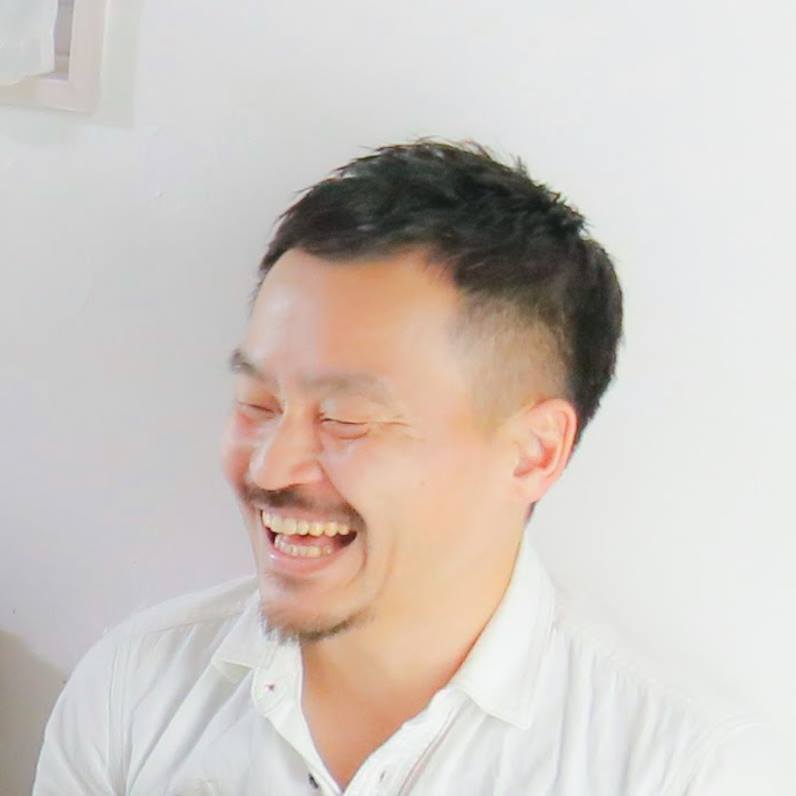 | Yuichiro “kuz” Kuzuryu Engineer / Executive Has fallen into all sorts of valleys of death, from launching new businesses inside large Japanese corporations to Silicon Valley startups. CEO, Founder, ClayTech Inc. Director, EYS-STYLE Inc. Director, 144Lab Inc. Visiting Professor, Tohoku University Also serves as technical advisor and advisor for several other companies https://twitter.com/qzuryu https://www.facebook.com/qzuryu https://www.linkedin.com/in/yuichiro-kuzuryu-kuz-27b92838/ |
Originally published in Japanese at https://clazytech.com/2019/09/229/. Translated with LLM assistance and reviewed before publication.